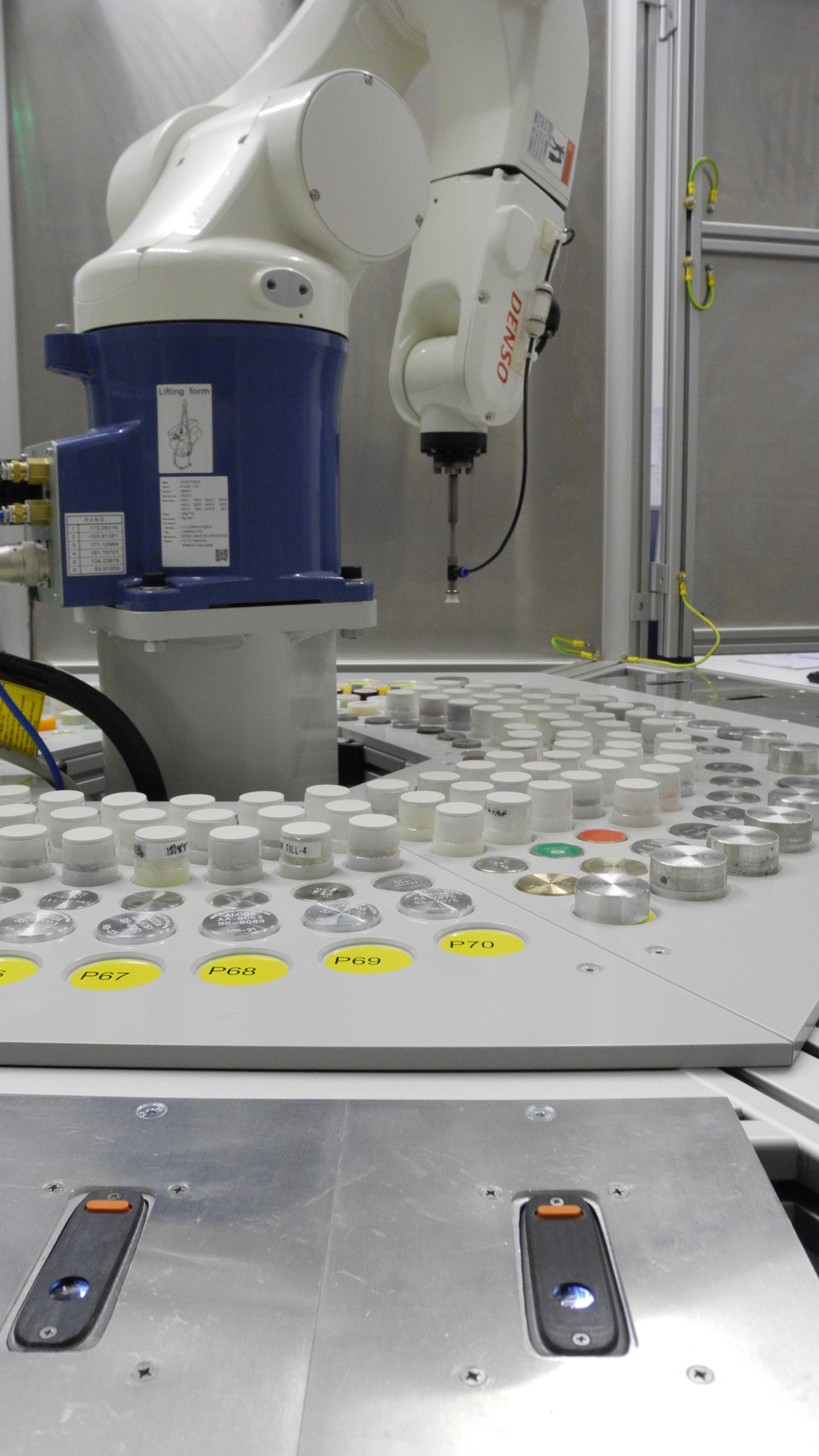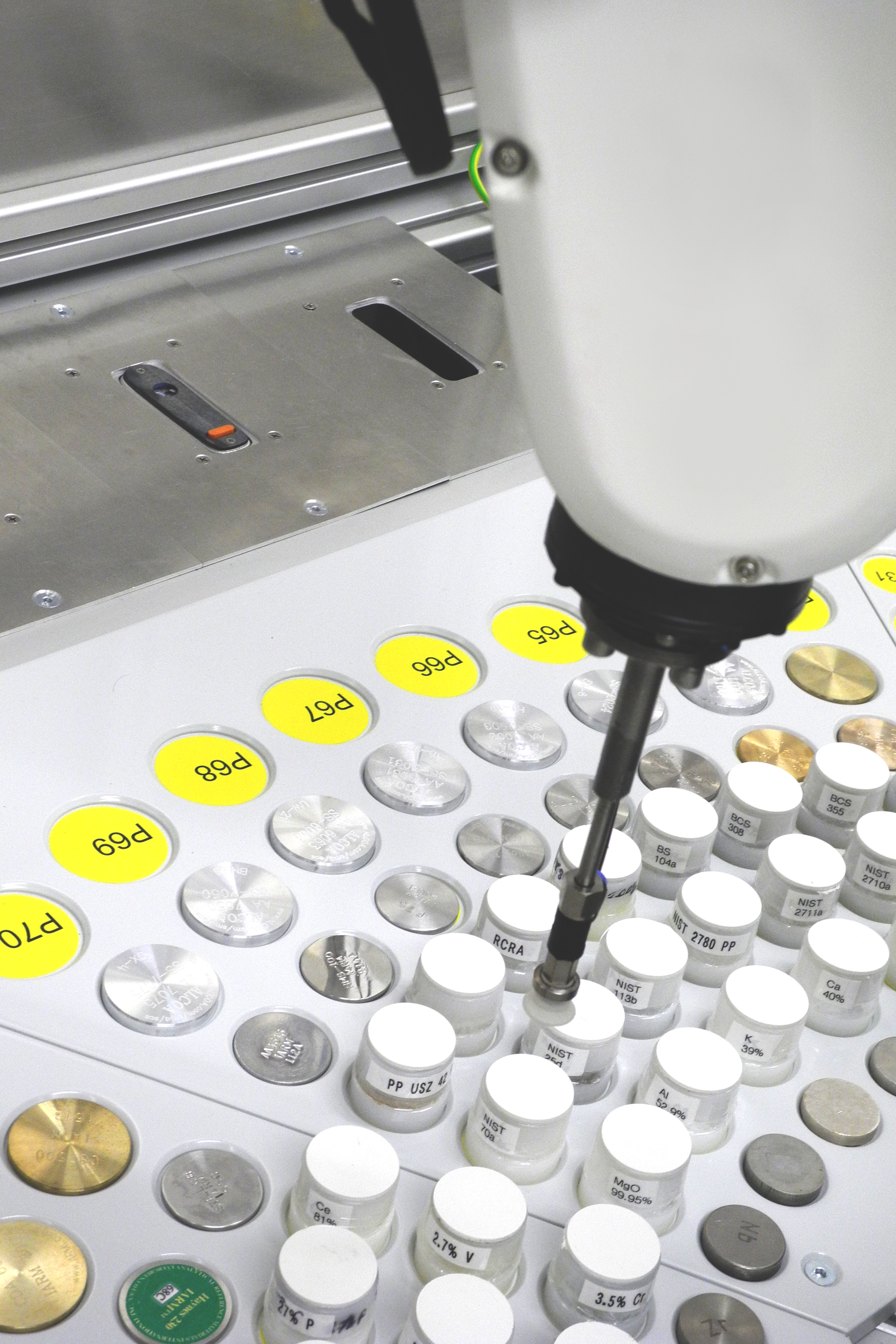
In the field of technology, the quest for efficiency and precision is a constant. With this in mind, analyticon instruments, part of the Physitek group, has developed a revolutionary tool: the Octopus robot. This innovative automated system is positioned as a key element in optimizing the calibration processes of portable spectrometers, offering significant gains in terms of time and repeatability.
Feature merging
The Octopus robot, developed by analyticon in Germany, embodies engineering excellence by combining a robotic arm with an integrated PC interface to which a management interface has been added. The latter allows for seamless interaction with portable spectrometers, including the FEnX-T. A unique feature of this automated system is its ability to simultaneously manage multiple devices, opening the door to increased efficiency when calibrating samples, whether pure or multi-element.
With a capacity for 20 devices and over 300 samples, the Octopus robot excels at repetitive tasks requiring the processing of predefined lists. However, it should be noted that this tool stands out more for its ability to process large quantities of samples than for specific calibrations. Robin Philippot, technical support engineer in elemental spectrometry at Fondis Electronic, explains: “To integrate samples into the robot, various criteria must be met, including their ability to remain on our premises and their size being compatible with the robot. For one-off or specific calibrations, it is often more productive to perform them manually.”
Synergie homme-machine
Although the Octopus robot is a real asset in terms of increasing productivity, it does not replace human labor. At Fondis Electronic, our technical team programs the controller according to the required calibrations and supervises the accuracy of the devices after they have passed through the Octopus. “Once the Octopus has performed the calibration and adjustment, we check that the device is correctly set,” explains Jérôme Raineri, technical support engineer in elemental spectrometry at Fondis Electronic. Downstream, we carry out the data processing work. If the results are not accurate enough, we readjust the calibrations and then repeat the tests.” This rigorous process guarantees the reliability of the results obtained.
Constant evolution
The Octopus is not fixed in its current design. It is an evolving tool that can always be improved to meet changing needs. At analyticon, our German colleagues have two robots, one dedicated to production and the other to experimentation, allowing them to test new features without disrupting the calibration flow. In France, the robot joined our premises in 2021.
Safety first
Due to the radioactive nature of the devices being handled, the installation and use of the Octopus robot must comply with strict safety standards. The room housing the robot is therefore secured and access is restricted to authorized personnel. The robot itself is locked during use, and a visual alert system using red lights clearly indicates when it is active.
In conclusion, Physitek’s Octopus robot represents a major advance in the automation of portable spectrometer calibration processes. Combining efficiency, precision, and safety, this revolutionary tool is an indispensable partner in the quest for increased performance and better human resource management.