The aluminum context
The price of aluminum reached its highest level in nearly 13 years on September 14, 2021.
Two factors combined to cause this surge:
- Demand for aluminum is particularly strong at the moment, and China is rationing its production to avoid consuming too much electricity in order to meet its carbon emission reduction commitments. This is reducing primary aluminum production;
- The coup in Guinea has also played a role. Guinea is the world’s second-largest producer of bauxite, behind Australia and ahead of China.
Why is bauxite linked to aluminum? This ore is the main raw material used to produce aluminum.
How is aluminum made?
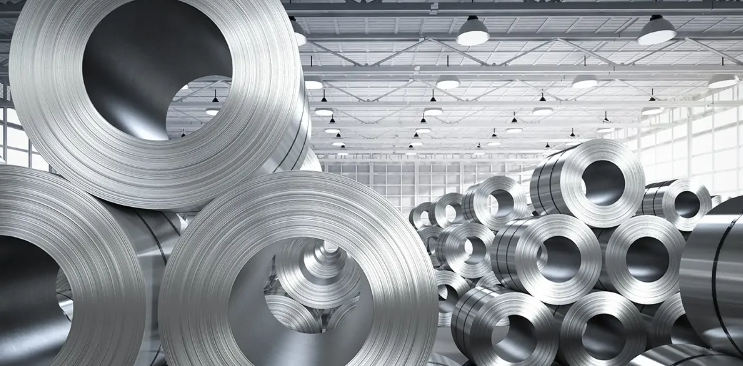
1.5 billion tons of aluminum have been produced since 1888.
In 2019, 75% of all aluminum ever produced is still in use for productive purposes.
Two industrial processes are used to obtain aluminum:
1-Primary aluminum
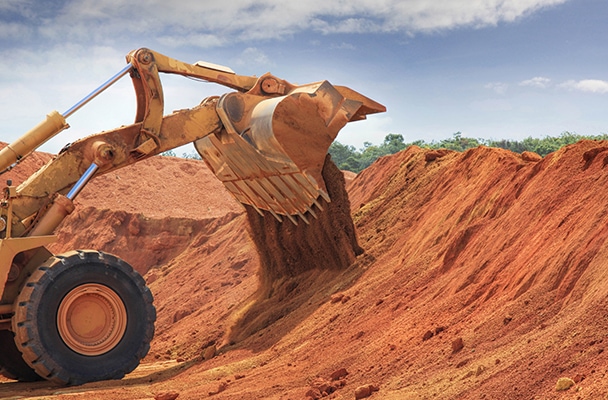
Primary aluminum is obtained directly from the mining of bauxite ore. For every ton of aluminum, 4 tons of bauxite are required, from which 2 tons of alumina are extracted.
Here are the manufacturing steps:
- Bauxite extraction
- Alumina production: the bauxite is treated with soda, which is diluted to obtain a white powder. This is alumina. Alumina is produced near the bauxite mining areas.
- The alumina is then dissolved and an extremely energy-intensive electrolysis process takes place. This produces liquid aluminum, which is sent to a foundry to be processed and shaped.
- Solidification: By adding different amounts of elements (Mg, Si, Zn, Cu, Fe, etc.), different aluminum alloys are created with specific characteristics.
2-Secondary aluminum
Aluminum is 100% recyclable. Through a second smelting process, its recycling reduces its carbon footprint: only 5% of the energy required to produce primary aluminum.
In France today, 50% of aluminum production comes from recycling, particularly for the aerospace, defense, packaging, automotive, and construction industries, etc.
Properties: Why is aluminum so widely used?
Aluminum is lightweight, strong, and recyclable.
It conducts electricity and heat. It is corrosion-resistant and malleable.
The density of aluminum is 2.7 g/cm3. It is about three times lighter than copper or iron.
Aluminum is everywhere. The main markets for aluminum products are transportation, building construction, packaging, and engineering.
XRF spectrometry, LIBS, and aluminum
Portable XRF (x-ray fluorescence) and LIBS (laser induced breakdown spectroscopy) spectrometers are used to sort and identify the composition of metal samples.
These devices can be useful at all stages of aluminum production: wherever it is necessary to perform a composition analysis or control (ore analysis, control of casting compositions in foundries, quality control during machining, sorting during recycling). For example, it is essential to have a good understanding of the composition of alloys before filling the furnace for the production of secondary aluminum.
XRF and LIBS spectrometry for aluminum recycling
With rising prices, it is becoming increasingly interesting and profitable to carry out precise sorting of aluminum alloys.
Portable spectrometers are now widely used in scrap yards to sort metal waste. Although recyclers currently use them mainly for sorting stainless steel, special alloys, copper alloys, etc., they can also be a very valuable tool for separating different families of aluminum.
When it comes to aluminum alloys, recyclers need to equip themselves with a specific category of portable spectrometers:
- Either XRF analyzers, equipped with SDD detectors. In the Fondis Electronic range, these are the FEnX-T
- Or LIBS analyzers
These different spectrometers are thus capable of determining the composition of all the elements present in aluminum alloys (Cu, Fe, Zn, Mn, Zr, Cr, Ti, etc.), including light elements (Mg, Si, Li, etc.).
With our spectrometers, it is possible, for example, to:
- Separate all the major aluminum series: 1000 series (Al 99%), 2000 series (Al-Cu), 3000 series (Al-Mn), 4000 series (Al-Si), 5000 series (Al-Mg), 6000 series (Al-Mg-Si);
- Separate alloys as common and similar as 6061 and 6063;
- Separate aluminum-lithium alloys used in the aerospace industry;
- Separate AA7050 (0.15% Zr) and AA7075 (0.2% Cr).