In the jewelry industry, determining the precious metal content is crucial to guarantee the authenticity of transactions. Traditional methods, such as acid testing, have long been the norm, but they have their limitations. Today, modern tools such as the Niton DXL spectrometer enable faster and more accurate analysis, reducing the risk of errors and inaccuracies.
The Limits of Acid Tests
Acid tests have been widely used to determine precious metal content. Each type of acid is designed for a specific alloy, whether it be 14-karat gold, 18-karat gold, or other combinations. To obtain reliable results, it is imperative to use the appropriate acid. Without it, the accuracy of the test is compromised.
In addition, interpreting the results requires significant experience. For example, stainless steel chains imitating 18-karat white gold have already fooled many professionals. This highlights the limitations of these tests in the face of increasingly sophisticated imitations.
A Modern Solution: The Niton DXL Spectrometer
Acid tests have been widely used to determine precious metal content. Each type of acid is designed for a specific alloy, whether it be 14-karat gold, 18-karat gold, or other combinations. To obtain reliable results, it is imperative to use the appropriate acid. Without it, the accuracy of the test is compromised.
In addition, interpreting the results requires significant experience. For example, stainless steel chains imitating 18-karat white gold have already fooled many professionals. This highlights the limitations of these tests in the face of increasingly sophisticated imitations.
Ease of Use and Security
The use of control acids, such as nitric acid and hydrochloric acid, requires strict precautions due to their corrosive nature. Tests are often performed in the back room, away from the eyes of customers. In contrast, the Niton DXL can be used directly on the counter, in full view of customers, thereby enhancing the transparency of the process.
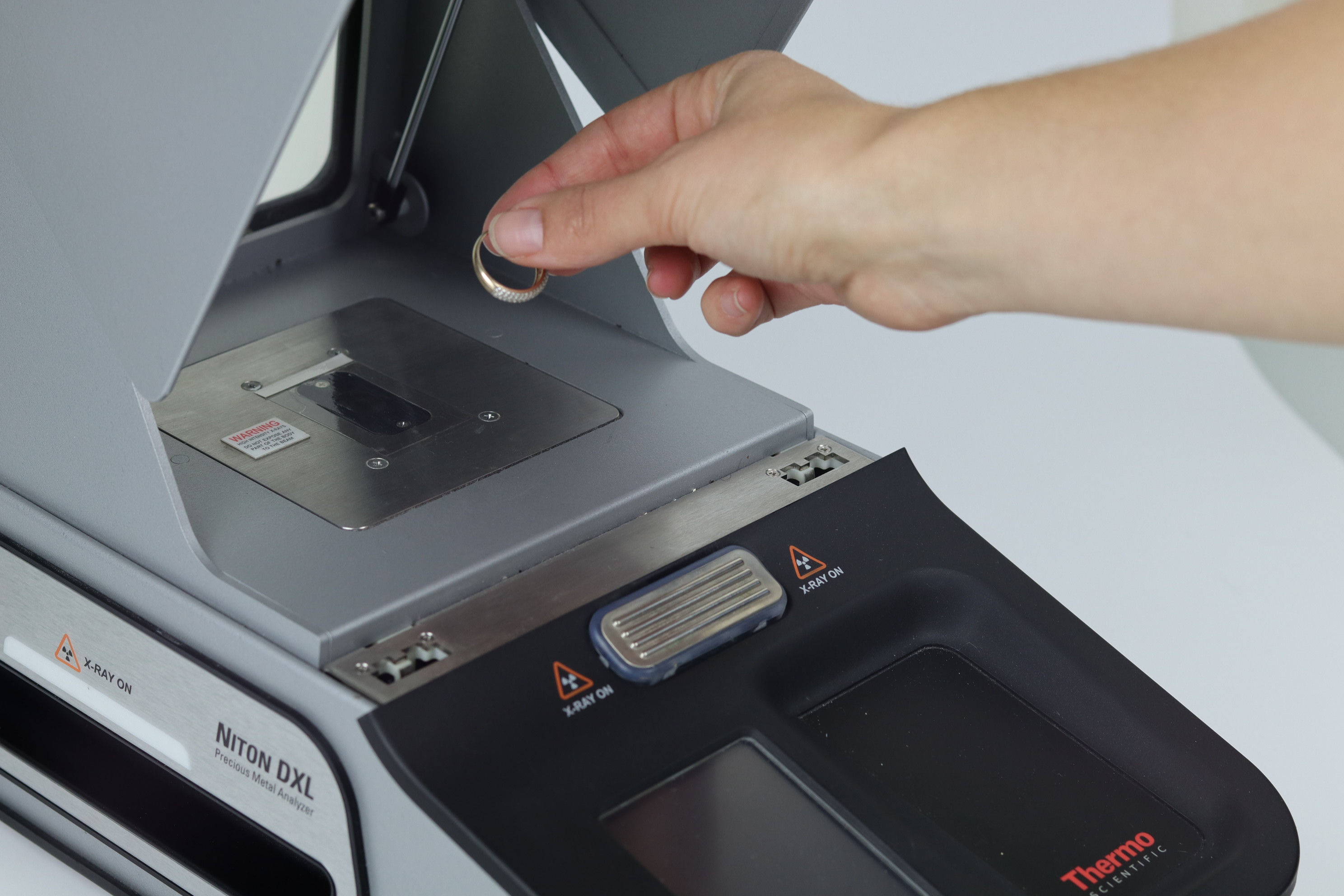
It is easy to use: simply place the sample in the device, press a button, and in a few seconds, the exact chemical composition appears on the screen. This speed and simplicity of use reassures the customer and makes the professional’s job easier.
Non-Destructive Testing
One of the drawbacks of acid testing is the need to sand or file the surface of the jewelry to reach the underlying metal, which can damage the item. This poses a particular problem for valuable items such as ingots or coins, where a simple scratch can result in a loss of value.
The Niton DXL spectrometer, using X-ray fluorescence, performs non-destructive analyses. This technology preserves the integrity and value of the items being tested, while providing reliable results.
Détection du Placage Or et des Alliages Modernes
Acid tests provide a basic identification of silver, limited to a simple yes or no answer without determining the exact content. In addition, certain materials such as titanium, tungsten, or stainless steel cannot be detected with traditional acids, even though they are commonly used in jewelry today.
The Niton DXL, thanks to its advanced AuDIT technology, accurately detects gold plating and identifies non-gold substrates such as vermeil, copper, and tungsten. This makes it possible to identify counterfeits and ensure the authenticity of objects.