
After several years of leasing, the Interprofessional Prune Office (BIP) acquired the MicroNIR Onsite-W in 2022. Spotlight on its use in prune production.
The Interprofessional Prune Office
The Interprofessional Prune Office (BIP) is an interprofessional organization that facilitates communication, marketing, and technology in the areas of orchard management and prune processing, bringing together producer and processor organizations. It comprises a communications department, a Protected Geographical Indication (PGI) department, and an orchard department that conducts trials on irrigation, varieties, vital products, and product certification. The BIP also has a laboratory and technology department dedicated to small processors who cannot afford to acquire a laboratory; It now covers the technological aspects of prune drying and processing.
In order to meet their analysis needs, the BIP initially equipped itself with an ASD spectrometer. Wanting to carry out an analysis to optimize fruit quality, a portable analyzer became indispensable during harvest periods. The technicians, who carry out analyses in the orchard, tested various devices and chose the MicroNIR Onsite-W, which meets many of their criteria. “I mainly use the MicroNIR for the acidity and Brix model on plums,” explains Monique Capelle, Laboratory and Technology Manager, and Quality and Metrology Manager.
From renting to purchasing the MicroNIR Onsite-W
Initially, the BIP rented the MicroNIR Onsite-W for the summer period, when the plums are harvested. Renting allowed them to assess the feasibility of the desired analyses while developing the database needed for the harvest period. Satisfied with the product, they decided to invest in the MicroNIR Onsite-W with the aim of working on dry products. “By purchasing the MicroNIR Onsite-W, we have much more freedom to use it throughout the year, not to mention that it is more cost-effective for us than renting,” adds Monique Capelle.
A promising tool in the prune industry
This year, the MicroNIR Onsite-W will incorporate protocols validated by the BIP for use in orchards by technicians. “We are working with a plum that is 80% water, which is then dried to 20% moisture before being rehydrated. MicroNIR allows us to determine the moisture content of the product, which is one of the most important commercial criteria for prunes.” The BIP will work with the MicroNIR Onsite-W on qualitative criteria of acidity and pH in prunes in order to associate them with an organoleptic component. The goal is to develop and qualify a premium prune. It wants to define taste criteria to complement the geographical criteria linked to the current IGP (Protected Geographical Indication) for prunes.
Among the companies that make up the BIP, only one has taken the plunge and equipped itself with the MicroNIR Onsite-W. The BIP would like other companies to follow suit, given the high demand it is receiving for moisture analysis in factories. Although current methods are fast, they are still destructive, whereas the MicroNIR Onsite-W provides rapid results with non-destructive measurements.
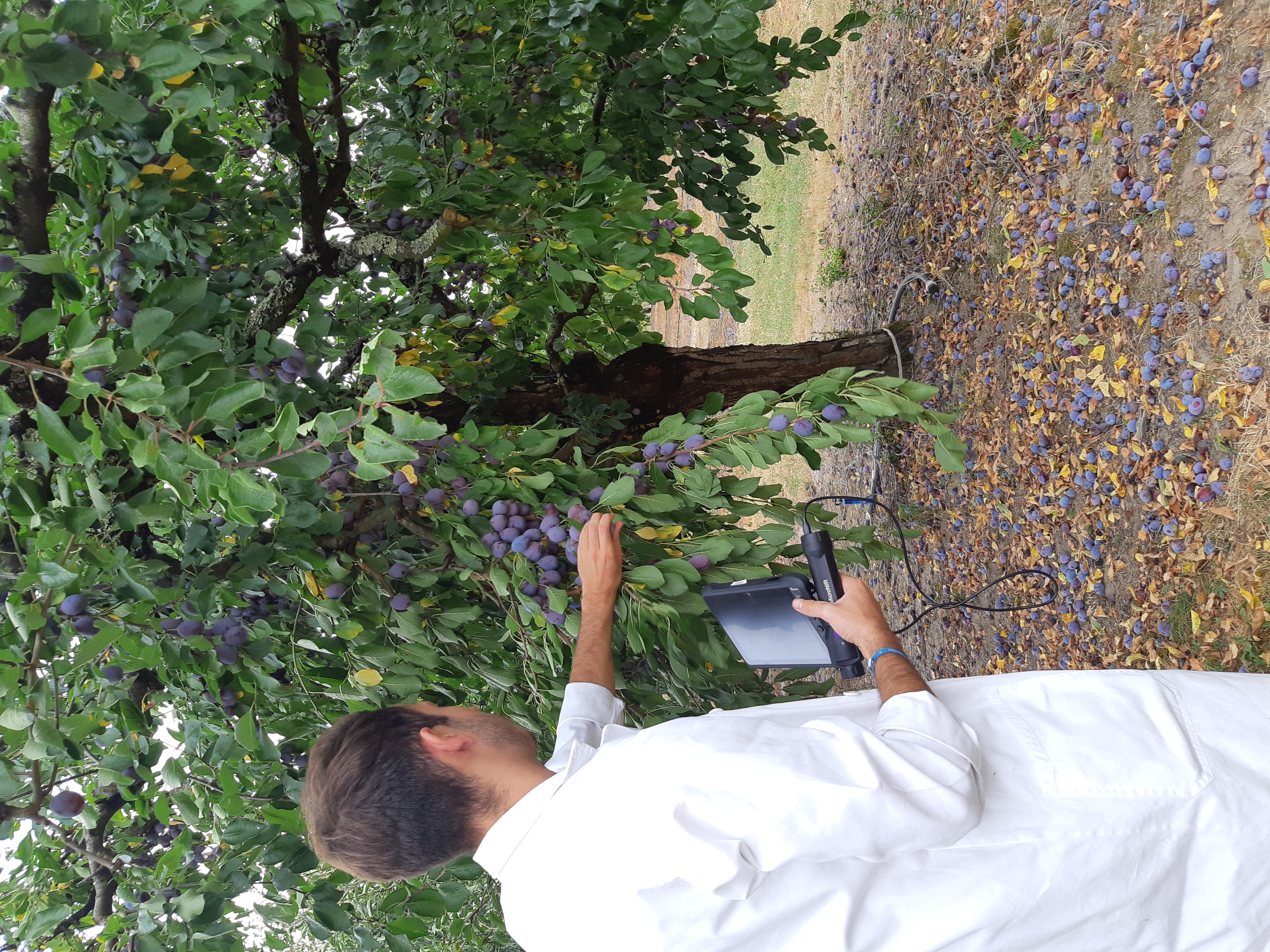
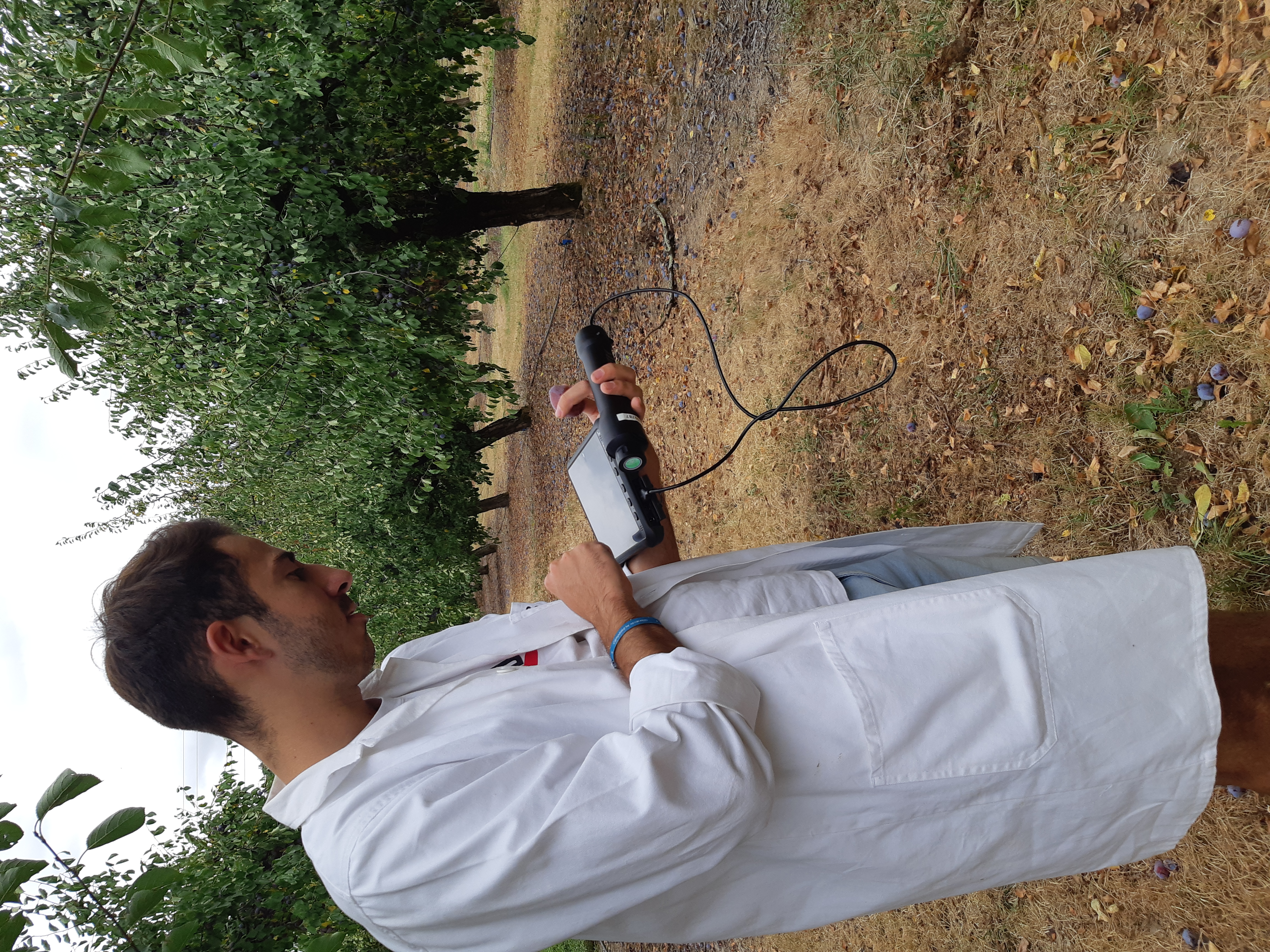
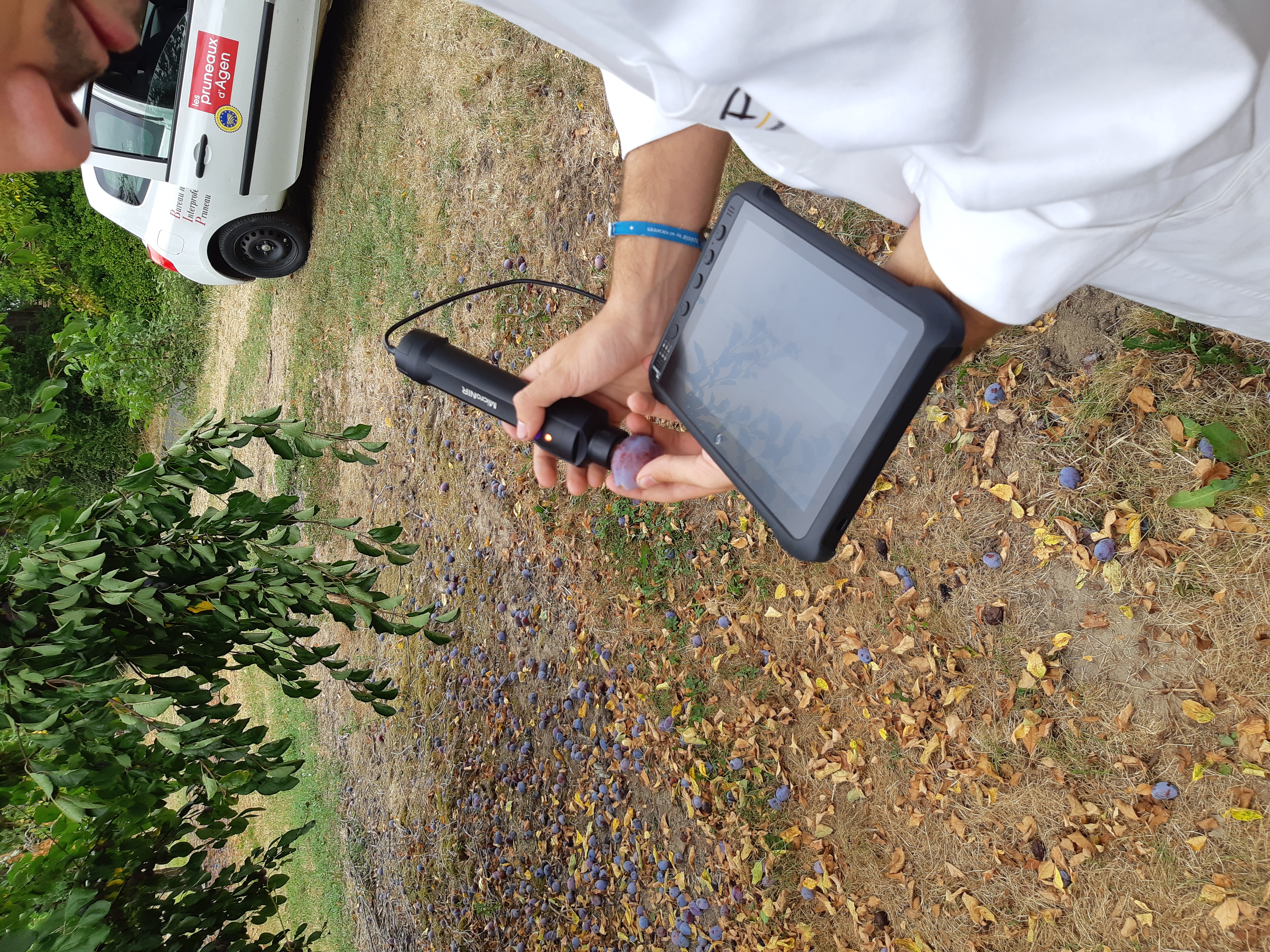
Harvesting plums with the MicroNIR On-site-W