
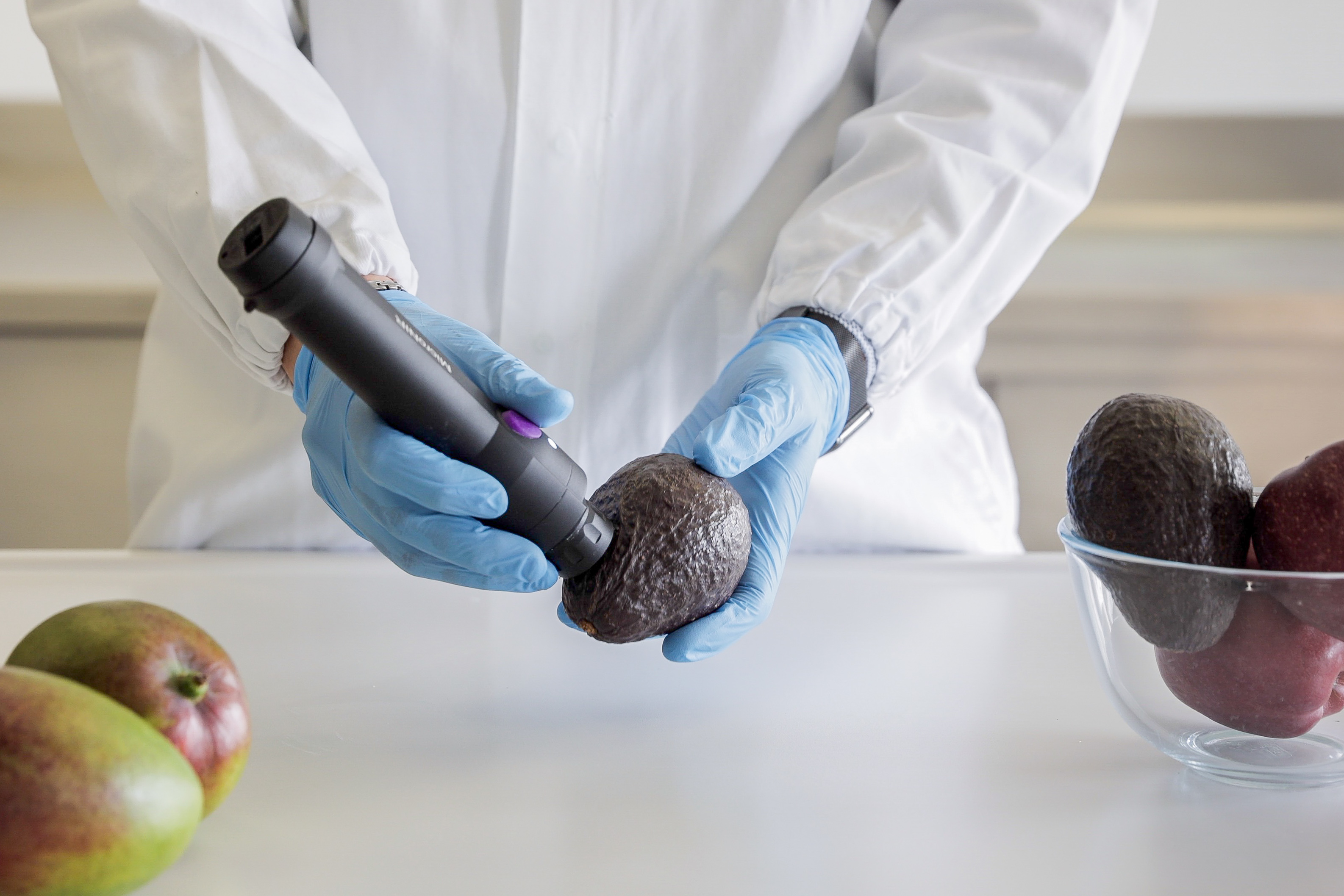
In the food industry, the quality of raw materials and food products is paramount. It is therefore regularly monitored.
- In agriculture, quality control helps to determine the ideal time to start harvesting (based on the ripeness of fruit and vegetables).
- In a processing plant, quality control is used to check raw materials upon receipt and finished products upon leaving the plant.
The time taken to return analysis results must be kept to a minimum to ensure that finished products or foodstuffs are delivered in the best possible condition. This means quickly and reliably predicting the main chemical and nutritional parameters of a sample of raw material or food.
Some concrete examples of quality control in the agri-food industry:
- Predicting the protein, fat, or moisture content in milk, meat, fish, and cereals;
- Predicting the ripeness of vegetables and fruit so they can be harvested at the right time;
- Predicting the amino acid composition of raw materials for animal feed;
- Predicting the ethanol content of wine;
- Etc.
Near-infrared spectrometry and predictive models for quality control
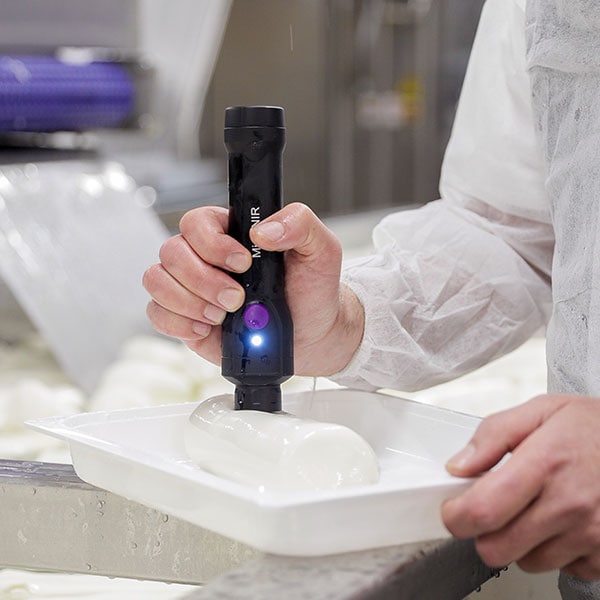
Near-infrared (NIR) technology is used in the food industry because it addresses the issues of time and reliability in quality control in the sector.
It offers the possibility of performing multi-parameter measurements. Each analysis can determine several parameters. The results are fast and reliable. Speed is further enhanced by the widespread use of portable NIR spectrometers, such as the MicroNIR OnSite-W, which allow measurements to be taken directly in the field.
How does near-infrared technology work?
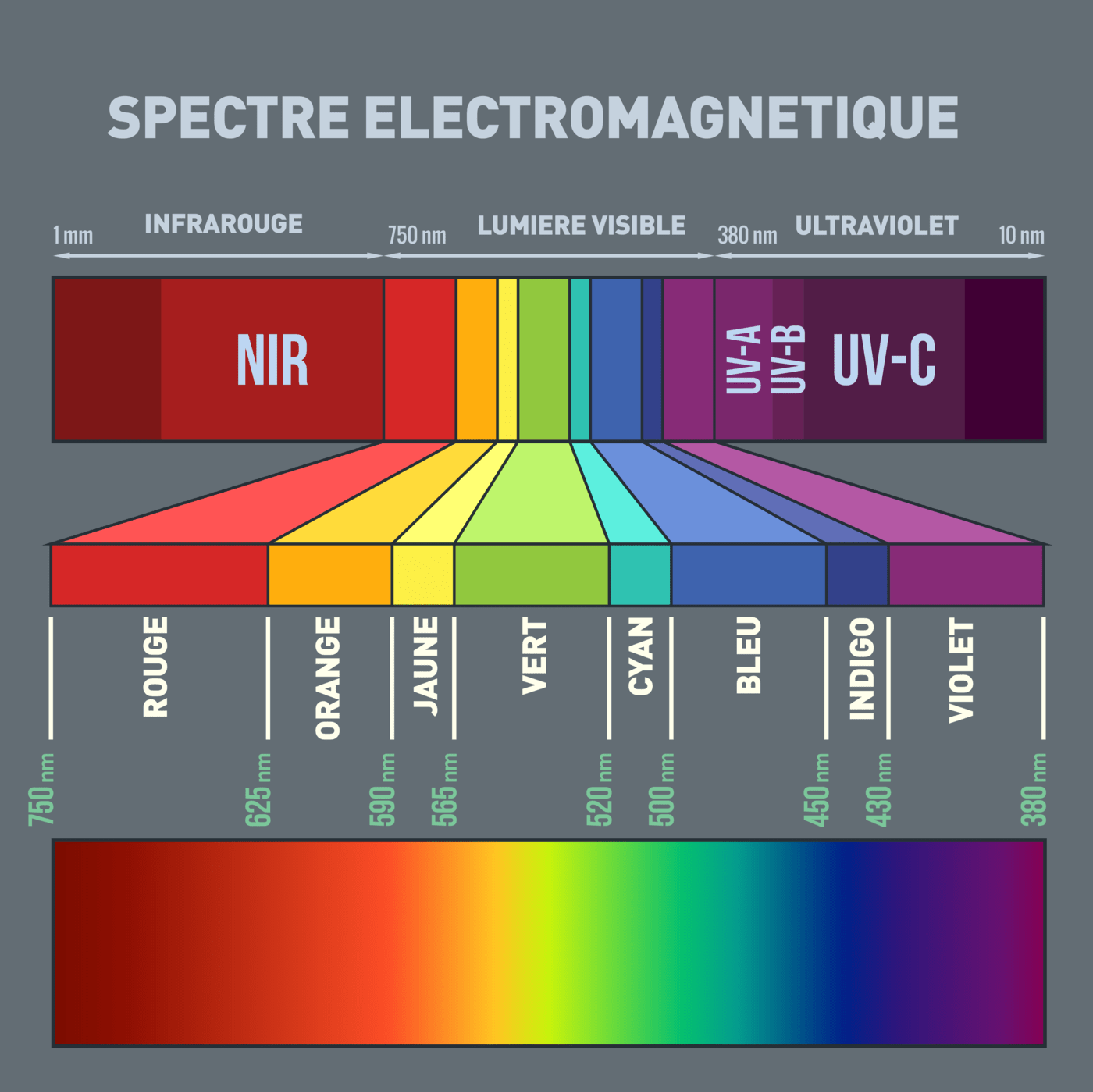
The organic molecules present in the analyzed sample undergo vibrational movements when the chemical bonds are excited by a light source.
The photons reflected after absorbing part of the radiation energy create a measurable signal.
Spectrometers collect and measure these signals, which carry information about the chemical nature and physical state of the sample.
This measurement method is indirect: an NIR spectrum requires signal processing to extract information in order to quantify the components of the sample.
The processing of this data is a discipline that combines mathematics, statistics, and chemistry: chemometrics.
To arrive at usable predictive models, the following steps are taken:
- Identify the compound within the sample. This classification is performed using data processing algorithms.
- Link the spectral position and the signal intensity to measure the components by regression.
A predictive model is therefore established by constructing a link between spectra collected in the field with a spectrometer and actual values calculated in the laboratory.
This long and meticulous work requires expertise in chemometrics within quality laboratories. For these reasons, the development of specific calibrations can be an obstacle to achieving the analytical performance of PIR/NIR.
The use of near-infrared spectral data by a chemometrician makes it possible to correlate data with quality criteria (physicochemical measurements, agronomic parameters, sensory profiles, spectroscopic measurements, etc.) in order to build prediction models.
Examples of statistical tools: calculations of mean, variance, covariance, etc. The PLS chemometric method, Partial Least Square Regression, seeks to maximize covariance.
The development of models raises questions:
- What is the best combination of pre-processing techniques?
- Which algorithms are best suited to the data?
- How can a model be validated?
There is now a new, faster and simpler solution called Hone Create.
A powerful tool for building predictive models

With the Hone Create solution, an average user with no particular expertise in chemometrics can create predictive models in just a few minutes. Hone Create is a highly advanced artificial intelligence platform.
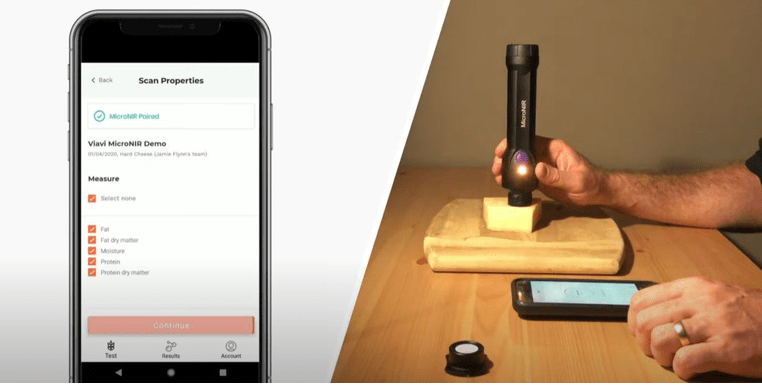
How to use Hone Create?
- Simply upload the data collected in the field with the MicroNIR spectrometer to the Hone platform.
- The software automatically performs more than 15,000 combinations of pre-processing and algorithms, as well as millions of permutations with the uploaded data to find the right model.
- Once the model has been established, it can be shared with users within the company via the web or the mobile app.
In this demonstration video, you can see how easy this innovative solution is to use.
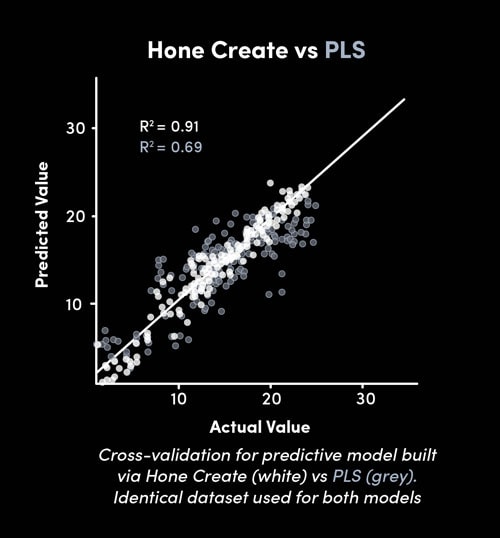
Not only is Hone Create simpler and faster to use than traditional chemometrics software, but its AI allows you to create models that are more accurate and robust than traditional methods, as can be seen in the graph opposite.
With MicroNIR OnSite W and the Hone Create solution, the issues of speed and reliability in quality control in the food industry are resolved. For more information, contact our teams.